Pages

Showing posts with label Climate change. Show all posts

Tuesday, 5 November 2019

Science - Climate Change and the Future

Aim; To look at the different ways we can prevent climate change in the future.


What places will be effected?
Pacific Island, New Zealand (Different places near the sea)

What else do we need to think about?
Where you live, Where to build houses,


What other places around NZ will be affected?
Auckland - Har bour, Lion rock, Nelson, Bay of islands and more

What does this do to our drinking water?
Salt water, Sea level rise

What are the main concerns?
  1.  One of the main concerns are where to build your houses as the sea level rise can floud those houses  
  2.  The second one is that we will stat to get salt water into our drinking system.

What can we do?
  1.  Build our houses away from the sea
  2.    STOP plastic

What is the one, silver bullet solution?
There is no silver bullet 


What is the mix of things we need to start doing?
  1.   Renewable 
  2.   Solar heating
  3.  Transport
What are 3 others you can think of?
  1.  Walk
  2.   Cycle
  3. recycling
Activities:

Carbon Footprint

Carbon Footprint explained

Dwelling
Water
Recreation
Heating and cooling
Electricity
Transportation
Food
Waste
Air Travel
Consumption

Colour 1: for actions they are already doing 
Colour 2: for actions that they pledge to undertake in the future

Ecological Handprint The Ecological handprint builds on the concepts from the Carbon Footprint. We will look at the positive actions of:

  1. Transportation
  2. Community
  3. Consumption
  4. Water
  5. Food
  6. Home
  7. Waste


1 Colour: For each action you are already doing 
2 Colour: For each action you would like to do in the future

    Friday, 13 September 2019

    Science - Reflection


    AIM: TO LEARN ABOUT WATER ON EARTH.

    Definition:


    Scientific words:

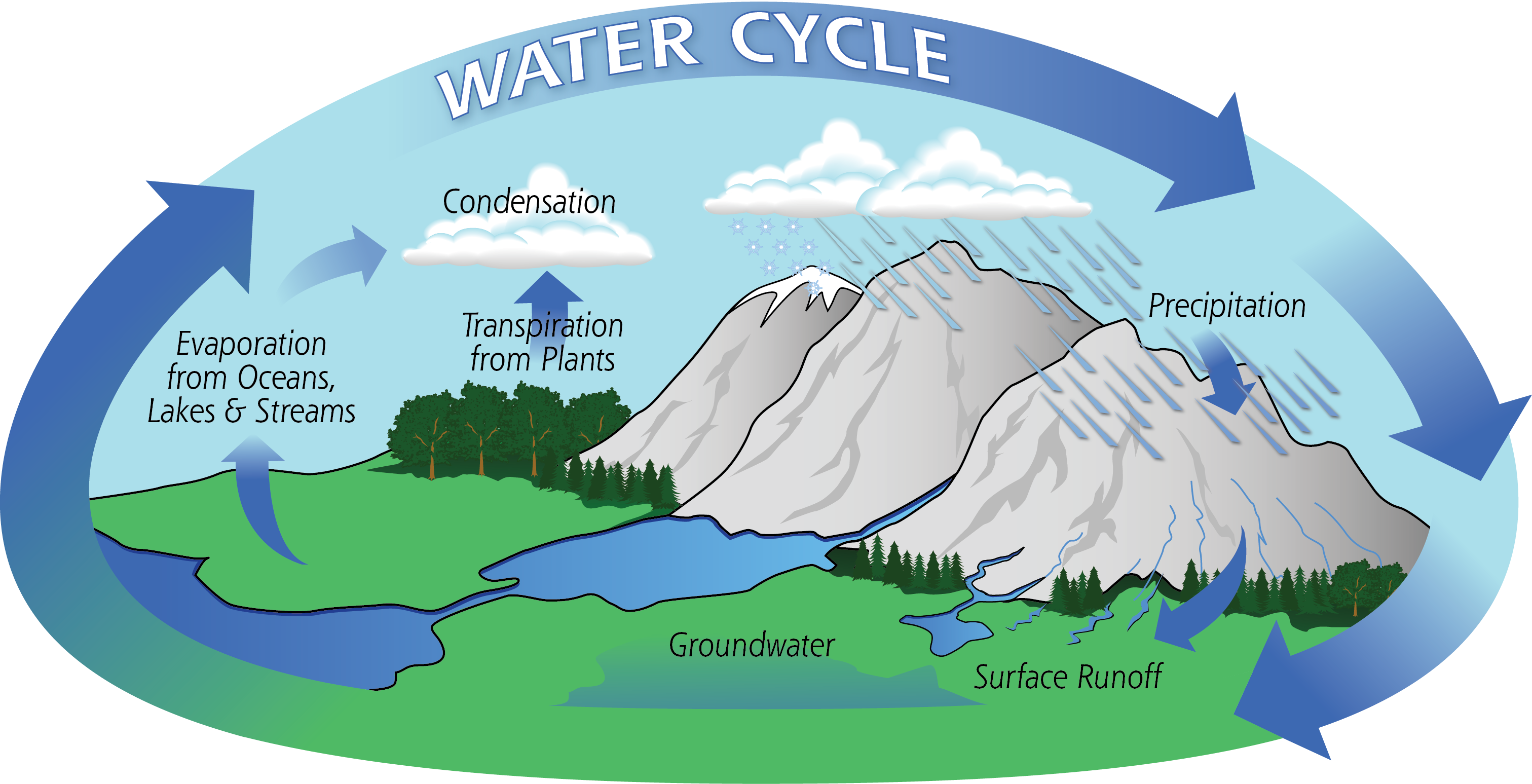
    • Evaporation. When water is heated by radiant energy it turns into water vapor.
    • Transpiration. Evaporation from plants.
    • Condensation. When water vapor cools, molecules join together and form clouds.
    • Precipitation. When clouds get heavy the waters falls as rain, sleet, hail, or snow.
    • Acidification: the action or process of making or becoming acidic.

    THE WATER CYCLE SONG

    Image result for the water cycle

    THE WATER CYCLE EXPERIMENT

    Bag 1: Normal Water cycle
    Bag 2: Water cycle with CO2 added: like Oceans in climate change
    Bag 3: Water cycle with ice added: like Antarctica in climate change

    Material:

    1.  Vivid
    2.  2x Bags
    3. 1/2 Water 
    4.  1 tbsp of baking soda

    Steps:

    1.  Draw your water cycle
    2.  Carefully add the water
    3.  If your doing the acid one, add 1 tbsp of baking soda and litmus paper at the top
    4.  Add some food colouring
    5. Wait at least 2 - 3 wks

    Two Images:


    Findings:


    The Water Cycle: Bag 1
    CO2 Water Cycle: Bag 2
    Acid
    Desert Water Cycle
    Bag 3
    Does it cycle?
    23
    Amount of Water
    23
    Acidity
    13

    Key: Water and acidity amount: 1 = none 
    2 = small 
    3 = large 


    Conclusion:


    The normal water cycle had less condensation than the other. The normal bag didn't have any Baking soda involved

    The water cycle with the acid, had changed the colour of the litmus paper to red after it started out blue.


    Friday, 6 September 2019

    Science - Greenhouse afect

    Aim: To look at climate change and the greenhouse affect

    Aim: To see how hot it could get with a heat lamp


    Materials

    1. 1 plastic bottle
    2. 1 Teaspoon Baking Soda and Citric Acid
    3. 1 heat lamp
    4. 1 Thermometer
    5. 100 ml water
    6. 1 rubber band
    Procedure:

    1. Come and collect all of the materials from Mr Palmer.
    2. Setting up the lights, bottles, thermometers and bungs.
    3. Mr Palmer adds the baking soda mix along with 100ml of water.
    4.  Wait for 5 minutes and start recording the temperature.
    Variables:

    All water added to the bottles was from the classroom tap


    Minutes
    Bottle 1: Water 
    Bottle 2: CO2 Gas
    018.c18.c
    5                      25.c18.c 
    1026.c25.c
    15
    No Recording.
    No Recording.
    20 
    No Recording.
    No Recording.
    25
    No Recording.
    No Recording.
    30
    No Recording.
    No Recording.
    35
    No Recording.
    No Recording.
    40
    28.c
    38.c


    Conclusion:

    The normal bottle of water didn't get as hot as the CO2 water. This is just the same as climate change. I also found this experiment interesting.